
Why There Is No Middle Ground on Abortion
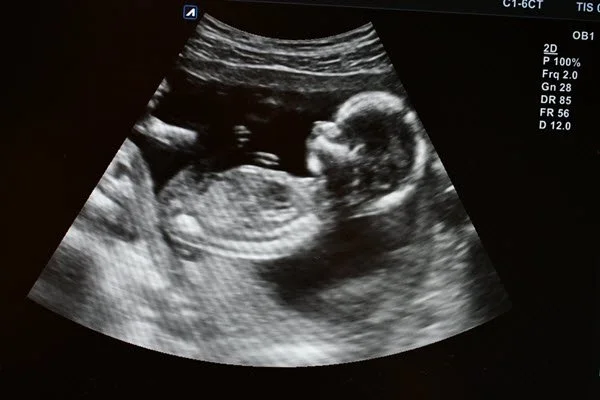
One of the most important truths in the public debate over abortion is also the simplest. The question has always been and always will be binary. Either the unborn child is a human life or it is not. And whichever answer a society embraces will determine everything else it believes and everything else it permits.
People often try to find a middle ground in this conversation. They look for a compromise that feels both compassionate and reasonable. But abortion does not allow for a middle space because human value does not come in degrees. A human life is either precious or it is disposable. There is no in-between.
This is the heart of the issue before Missouri as we work to restore a culture of life through Amendment Three.
1. If the unborn child is a human life then abortion cannot be justified
If the child in the womb is truly a human being then the moral conclusion becomes unavoidably clear. A just society cannot sanction the intentional ending of innocent human life.
The child’s value does not come from size or strength or ability. It does not come from birth or level of development. It comes from their humanity. And humanity is an unchanging reality. A child is fully human in the womb just as much as outside the womb. Location does not determine worth. A baby on one side of the birth canal is not more valuable than the same baby moments earlier.
When we acknowledge the undeniable humanity of the unborn we also acknowledge that they deserve what every human being deserves: protection, care, and the right to live.
2. If the unborn child is not a human life then abortion needs no justification
If the unborn child is something less than a human being then abortion becomes morally insignificant. In that worldview a pregnancy is simply a medical condition and ending it carries no more ethical weight than removing tissue.
Under this belief system there would be no reason to limit abortion. There would be no purpose in regulating it or questioning it. If no human life is involved then there is no moral issue to debate.
This is why the question “What is the unborn?” is not one question among many. It is the entire debate.
3. Attempts at a middle ground collapse under their own weight
Many people sincerely try to settle somewhere in between. They might say “I am personally against abortion but I do not believe it should be restricted” or “I support abortion in some situations but not others.”
But these statements only repeat the same unavoidable question. Does abortion end a human life or not? If it does then the law cannot remain neutral. If it does not then there is nothing to restrict. The middle position sounds compassionate but it cannot stand logically or morally. It is trying to hold together two truths that contradict each other.
It is like saying “I believe this is the taking of an innocent life but I do not want to interfere.” No one truly believes that. And if someone says “I do not believe abortion ends a life but I still oppose it” then their opposition has no grounding. The middle ground disappears the moment someone thinks about it honestly.
4. Human value cannot depend on preferences or circumstances
The worth of a human being is not determined by whether they are wanted or unwanted. It is not shaped by the convenience of the moment or by the predicted challenges of the child’s future.
If value is based on circumstance then value becomes changeable. And if value becomes changeable then it becomes negotiable. That is not how moral nations operate. A society that roots human value in circumstances will always favor the strong over the weak and the convenient over the vulnerable.
Human dignity is far too sacred to rest on such fragile foundations. The unborn child is a human being in every meaningful sense and therefore possesses full human value in every location, both inside the womb and outside of it. That child is created in the image of God, just like the rest of us.
5. The question is simple even when the debate is complicated
There are many voices, studies, arguments, and emotions surrounding the abortion issue. But in the end everything comes back to one simple truth.
What is the unborn?
If the unborn child is a human being then abortion is a grave injustice that cannot be shrugged off as a private decision. If the unborn child is not a human being then abortion is morally irrelevant. There is no third answer. There is no partial humanity. There is no moral halfway point.
A child does not become human at birth. A child does not gain value at a particular stage of development. A child is not more worthy of protection at one location than another. Life begins where God begins it, and it deserves honor the moment it begins.
The Choice Before Missouri
As we work to pass Amendment Three, we must remember that this is not just a political choice. It is a moral one. Will we extend the protections of human rights to the smallest and most vulnerable Missourians or will we withdraw those protections and leave them at the mercy of circumstance and convenience?
There is no middle ground on the value of a child. Either life matters from its beginning or it does not truly matter at all. Missouri has always been a place that defends the innocent and lifts up the weak. We have always believed that every life is a gift and that every human being carries the image of God.
This is the moment to reaffirm that conviction. This is the moment to choose life again. And with God’s help and the resolve of people across our state, Missouri will stand for the truth that every child, no matter their location, deserves protection and love.